Exterior shade before heat hits the glass
Solar heat control
Solar Screens in Phoenix for Cooler, More Comfortable Rooms
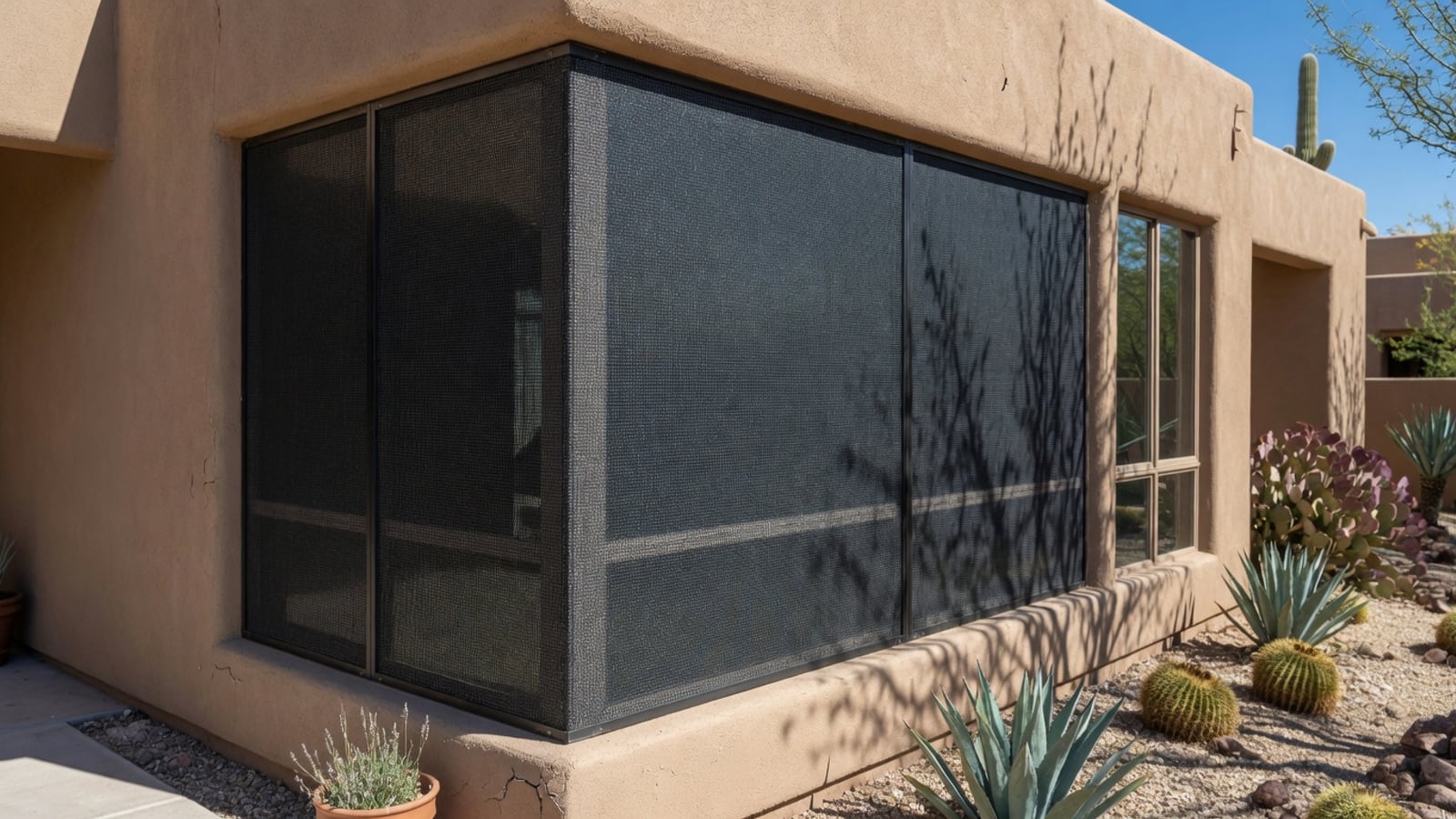
Dense exterior mesh helps tame direct sun, glare, and UV exposure before the heat hits your glass.
West-facing windowsGlare reductionMesh and frame options
Solar heat control
Plan solar screens around the rooms taking the hardest sun.
The first question is not just screen count. It is which rooms overheat, which windows face afternoon sun, and how much outward visibility you want to keep.
Cleaner curb appeal than temporary interior fixes
Measured openings instead of one-size panels
Service-specific check
Solar Screens starts with the conditions that change the recommendation.
West-facing bedroomsBright living roomsSouth-facing glassPrivacy-sensitive windows
Phoenix fit
Solar Screens planned around your windows, exposure, and curb appeal.
Phoenix sun is not gentle on windows. A well-fitted solar screen gives the glass a first layer of shade, helping rooms feel calmer without making the home look boarded up.
The right plan starts with exposure. West-facing bedrooms, bright living rooms, tall panes, and glass that forces curtains closed all day deserve different shade and visibility tradeoffs than shaded windows on the north side of the home.
A good estimate should not treat every opening the same. It should separate high-priority heat windows from lower-priority bug-screen openings, check the existing frame condition, and match mesh density and frame color to the way the home actually looks from the street.
- Custom measured for each opening
- Good for west- and south-facing windows
- Mesh and frame color options reviewed during estimate
Compare the options
Choose the screen path that matches the actual problem.
OptionWhat it solvesBest fit
Solar screensExterior shade and glare control before heat reaches the glassHot Phoenix rooms, privacy, UV and glare reduction
Standard insect screensAirflow and bug protection with lighter meshOpen windows and basic screen replacement needs
Interior shades or blindsLight control after sun reaches the windowDecor, privacy, and room-darkening inside the home
Before the estimate
Send enough detail to avoid a vague callback.
For Phoenix homes, the afternoon sun angle matters. A cooler bedroom, office, or great room may need denser exterior shade than a window that mostly sees morning light. The estimate should prioritize the worst exposures first instead of selling every opening the same way.
- List the rooms that overheat first
- Note west- and south-facing windows
- Count large panes separately from small bathroom or utility windows
- Think about privacy versus outward visibility
- Mention existing frame damage or missing screens
How this service is scoped
What happens before anyone promises the wrong screen.
Identify the hottest windows
Compare shade and visibility tradeoffs
Measure for a clean exterior fit
Straight Answers
Solar Screens questions
Do solar screens help with Phoenix heat?
Yes. Exterior solar screens shade the glass before direct sun hits it. They are not magic air conditioning, but they can reduce glare, cut harsh radiant heat at the window, and make hot rooms easier to use during Phoenix afternoons.
What is the difference between solar screens and regular window screens?
Regular insect screens are mainly for airflow and bugs. Solar screens use denser exterior mesh designed for shade, glare control, privacy, and UV reduction while still allowing some outward visibility.
How do I know which windows need solar screens first?
Start with west-facing and south-facing windows, rooms that overheat in late afternoon, bedrooms with harsh glare, and large glass areas where curtains stay closed most of the day. Those windows usually create the fastest comfort improvement.
Are darker solar screens always better?
Not automatically. Darker and denser mesh can improve shade and privacy, but it can also change outward visibility and the exterior look. The right choice depends on exposure, room use, and curb appeal.
Do solar screens replace blinds or curtains?
They solve a different problem. Exterior screens reduce sun before it hits the glass. Blinds and curtains manage light after heat is already at the window. Many homes use both, but solar screens attack the Phoenix heat earlier.
Free Estimate
Need solar screens in Phoenix?
Tell us what you need measured and we will route the request for follow-up.